Time-Tested Principles for Nourishing Postpartum Food
Pregnancy and postpartum fundamentally change the body and what it needs to function optimally. It's helpful to understand these changes so that you and those who love and care for you can holistically support you during the early postpartum window.
Changes to the Postpartum Body
Ancient systems of medicine and health can teach us a lot about this journey from pregnancy to postpartum and what a new parent needs to fully heal, recover, and thrive. These concepts really help to visualize the transition in the body from pregnancy to birth.
According to Traditional Chinese Medicine - which is a system of medicine with origins dating back to 14th century BC - birth fundamentally changes a new parent’s disposition. When a parent is carrying a child in their womb, their disposition is yang - in which the body is warm with the high volume of circulating blood and full due to the presence of the baby in the womb - to a more yin state - which is the empty and cold counterbalance to yang.
According to Ayurvedic medicine - which is an ancient system of medicine with historical roots in India - both childbirth and the void in the body left after birth is governed by the Vata dosha. Vata consists of two elements - air and ether (or space). Pregnancy and childbirth, as a result, naturally throws new parents into a place with excessive ether and a resulting Vata imbalance. Vata also regulates the nervous system. If it is unbalanced, a new parent may feel spaced out, ungrounded, or experience dryness, fragility, fatigue, hypersensitivity, and constipation. So, to create balance, the new parent needs to increase their Kapha and Pitta doshas which consist of earth, fire, and water.
Principles for Preparing Nutritious Postpartum Food
So, what does this all mean for the meals and snacks that you (and ideally others!) prepare after your baby is born? In the early postpartum period (first ~3-4 months), there are three principles or gentle guidelines to keep in mind.
Warming
Cold foods and drinks make the body work harder to heal and return to pre-pregnancy function. Cold foods can stagnate the circulation of blood necessary for returning the womb and reproductive system to a healthy state. They also slow down digestion, forcing the stomach and spleen to work unnecessarily hard. Cold foods are those that are cold to the touch (like salads) and also those that have cooling properties, such as watermelon, cucumbers, and radishes.
In addition to offering foods that are warm, warming spices can also be added to meals to create this sense of warmth and boost digestion. These include turmeric powder, cardamom, ginger, coriander powder, fennel seeds, cumin, fenugreek seeds, nutmeg, and cinnamon.
Easily digestible
You’re not what you eat - you’re what you digest! Easily digestible foods ensure that new parents absorb as much nutrition as possible. This is particularly true for the first couple of months postpartum. According to Chinese medicine, supporting the digestive system or “middle burner” of the body builds up the blood, which in turn builds good breast milk. Overstress the middle burner with inappropriate food, by contrast, and the resulting disruption can lead to excessive sleep deprivation and depression.
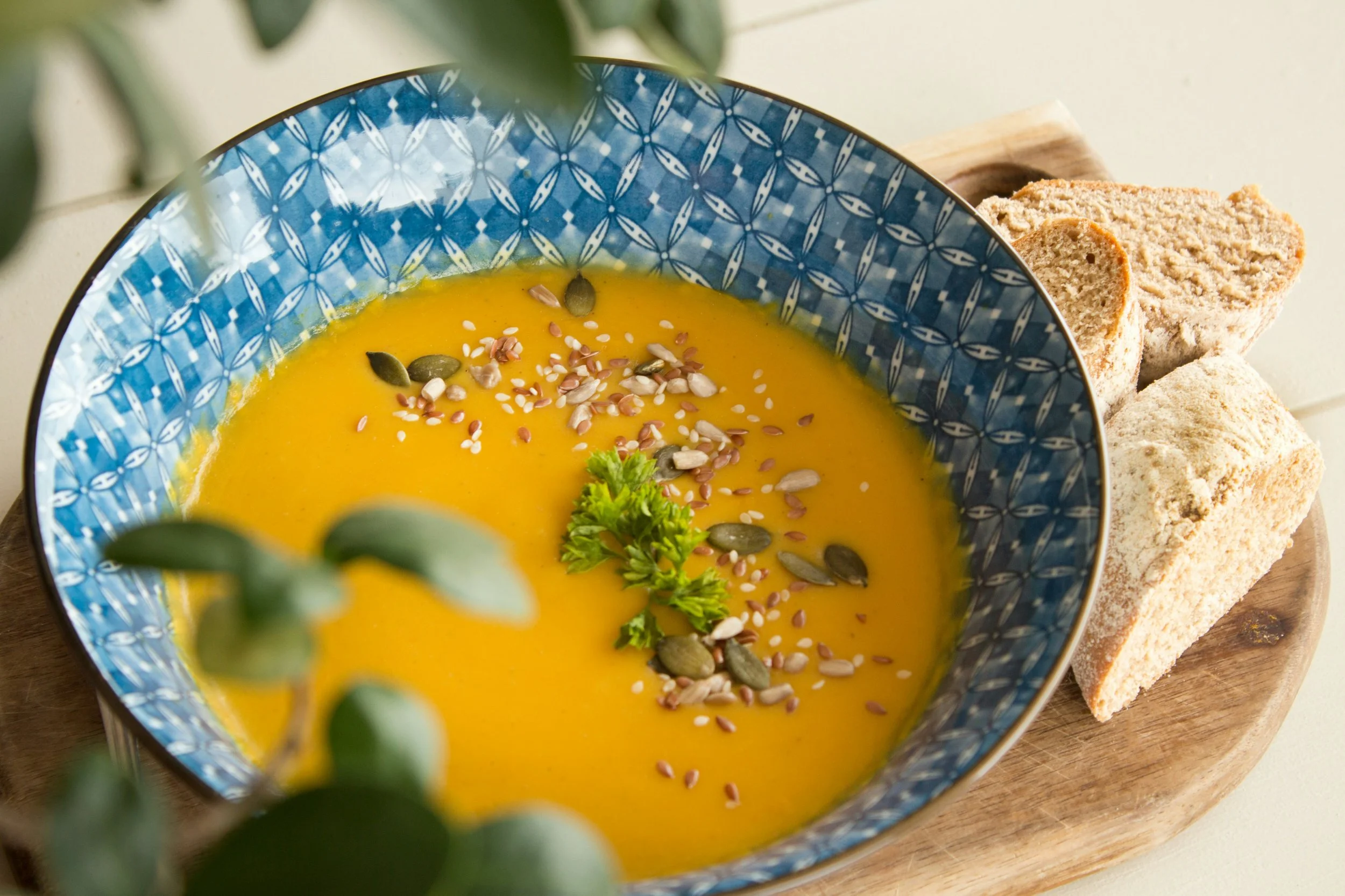
Easily digestible foods include things like soup, stews, cooked veggies, grains like rice, quinoa, and barley, well-cooked oats, slow-cooked meats, fish, eggs, and gluten-free or whole grain breads.
Grounding
Foods that are considered “grounding” help to balance the excess Vata that postpartum parents experience. Recall that Vata represents space and ether, so new parents might experience this as feeling spacy, ungrounded, and without much life or energy.
Grounding foods are foods that literally grow in the ground or near the ground. These include potatoes, sweet potatoes, carrots, turnips, parsnips, pumpkin, and squash, among others. You can roast these types of foods and easily incorporate them into stir fries, soups, stews, and other dishes.
These grounding foods are not only ideal for postpartum parents but also those who have adopted or are fostering. Parents who have recently adopted or are fostering are often going through significant change in their lives. These grounding foods can help to calm the nervous system and alleviate stress and anxiety and offer comfort.
Bringing It All Together
The key to food in early postpartum is to eat enough, incorporate whole foods and ingredients when possible, and focus on warmth, oiliness, moisture, and simplicity. New parents navigate an immense amount when the baby arrives so preparing meals and stocking your pantry before the baby is born is always a good idea. Soft and warm soups and stews with good fats, good sugars, grounding ingredients, and warming spices will give you the energy you need and will be easily digestible. You can introduce more texture and variety when it feels right.